Free-Standing Support Systems
Key Features
Non-penetrative design – protects roof membrane integrity
Engineered to project-specific wind loads
Modular construction for adaptable layouts
Suitable for lightweight and heavy-duty screening
Ballasted system to resist uplift, sliding and overturning
Corrosion-resistant structural components
Simple and efficient installation.
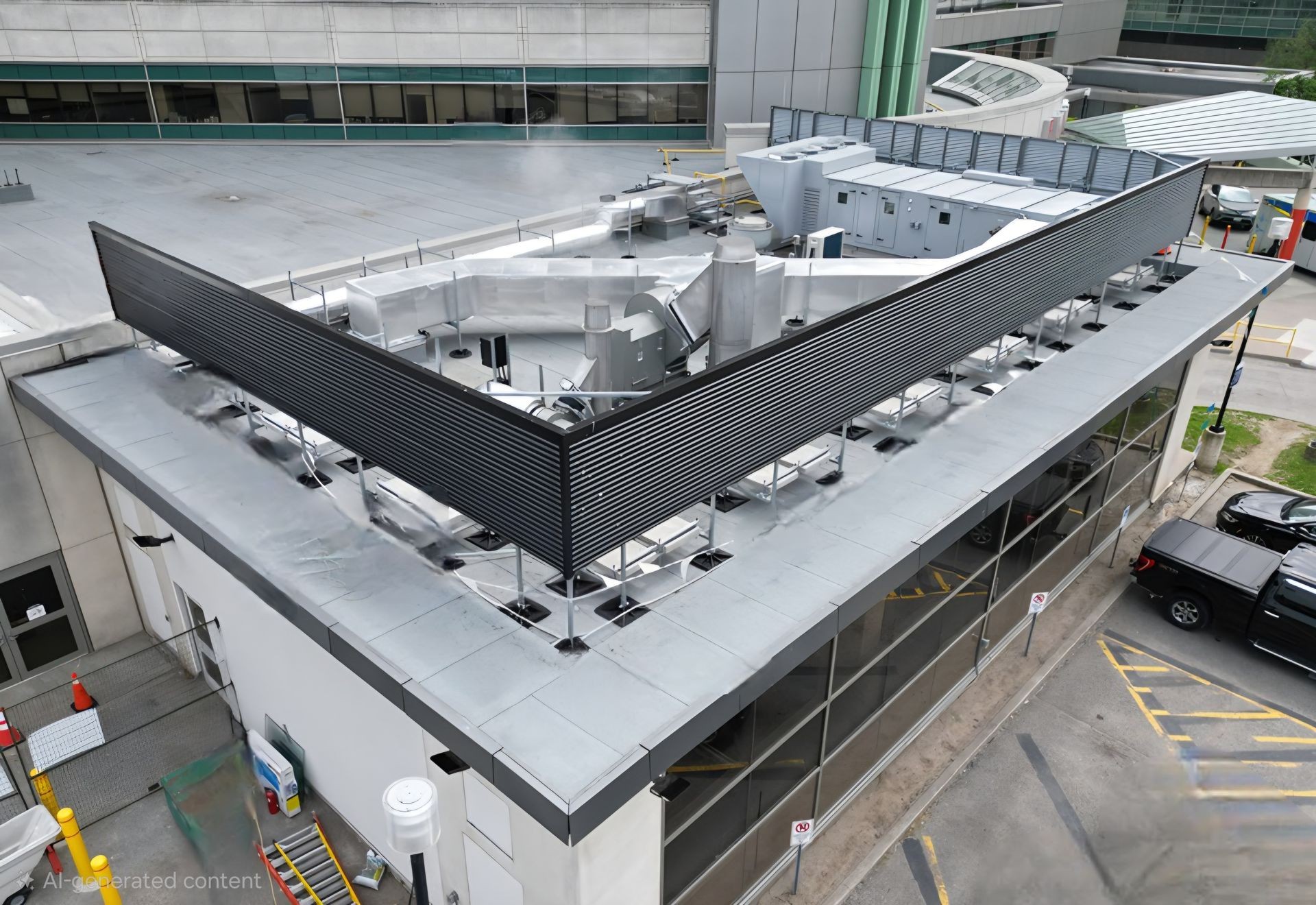
Free-Standing Support Systems
Free-Standing Screen Support Systems
1. System Overview
Free-standing screen support systems provide a non-penetrative structural solution for supporting rooftop screening installations. Designed to conceal plant and equipment such as HVAC units, ductwork, pipework, and associated services, the system accommodates a wide range of screening types including weather louvres, perforated panels, composite cladding, and acoustic enclosures.
The modular design allows flexible configuration to suit varying screen heights, lengths, and wind loading requirements.
2. Key Features
Non-penetrative design — no roof membrane penetration
Engineered to project-specific wind load requirements
Suitable for lightweight and heavy-duty screening applications
Modular construction for flexible layout and scalability
Compatible with flat roof constructions
Durable, corrosion-resistant components
Designed for ease of installation
3. Typical Applications
HVAC screening
Rooftop plant enclosures
Acoustic screening
Visual screening for planning compliance
Service riser and ductwork concealment
4. Construction & Materials
Structural framework: Galvanised steel channel system
Bracing: Structural steel sections designed to resist lateral loads
Base support: Non-penetrative support feet or slab-mounted assemblies
Ballast: Precast concrete slabs (quantity determined by structural calculation)
Fixings: Zinc-plated or stainless steel mechanical fixings
All materials are selected to provide durability and long-term performance in rooftop environments.
5. Structural Performance
Designed in accordance with relevant structural design standards
Wind loading calculated to site-specific requirements
Ballast sizing determined by height, exposure category, and screen type
Designed to prevent uplift, sliding, and overturning
Structural calculations available subject to project requirements.
6. Design Considerations
Roof type and load capacity
Wind exposure category and building height
Screen height and infill type
Maintenance access requirements
Drainage and roof falls
Thermal movement and expansion
A structural assessment of the roof is recommended prior to installation.
7. Installation
Suitable for installation on flat roofs
Installed by competent personnel
Final layout subject to approved design drawings
Ballast and structural configuration must not be altered without approval
8. Compliance
Designed to meet applicable wind loading standards
Non-penetrative to maintain roof waterproofing integrity
Installation to comply with relevant health and safety regulations

Technical Drawings for Approval & Installation
Comprehensive technical drawings are provided to support project approval and on-site installation. Drawings detail system layout, structural configuration, ballast requirements, and key dimensions to ensure accurate coordination with roof layouts and loading criteria.
Issued for approval prior to works commencing, they provide a clear reference for contractors to install the system safely and in accordance with the agreed design.
Get in touch
Have questions or need assistance? Our team is here to help! Whether you need expert advice on ventilation louvres, a custom solution, or a quote, feel free to reach out.